Logistics runs on inboxes, rate sheets and systems that do not talk to each other. A forwarder's pricing desk answers RFQs from email. Operations retypes bookings into the TMS. Customer service answers "where is my shipment?" by checking three portals. Finance chases the same overdue invoices every week.
An AI workforce is the answer most logistics enterprises are now building toward: a team of AI workers, each owning one of these jobs end to end, running inside the company's existing systems and governed like any other part of the operation.
What an AI worker is
An AI worker is more than a model or a chatbot. It is an AI agent with a job description:
- A goal. For example: answer every inbound RFQ within minutes, priced against the company's own tariffs and margin rules.
- A quality bar. A measurable target, such as goal attainment or the share of files created with no corrections.
- A human owner. A named person or team who reviews its exceptions and is accountable for its output.
- Boundaries it cannot cross. Margin floors, mandatory review for dangerous goods, systems it may read but not write. These are enforced at the connector, not left to a prompt.
- A trace for every decision. Each AI step records its confidence and reasoning, so any number on a dashboard can be followed back to the decisions behind it.
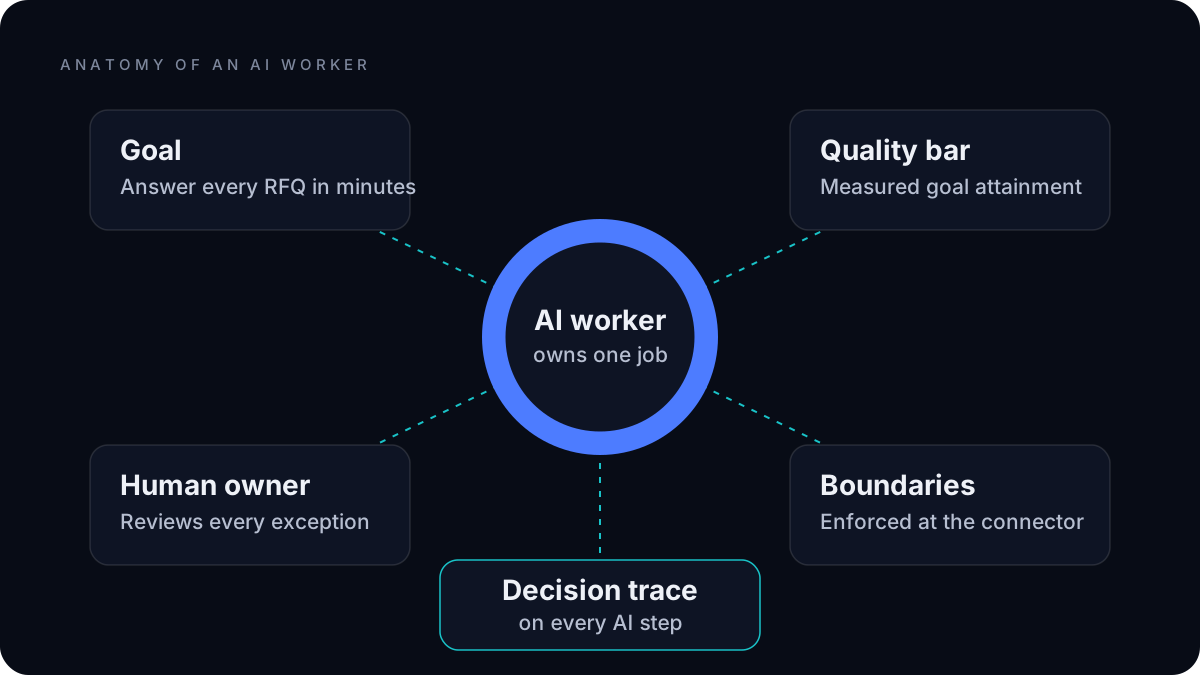
A collection of these workers, managed and measured together, is an AI workforce.
What AI workers do in logistics
The work that suits AI workers is high-volume, rule-heavy and mostly unstructured: emails, PDFs, spreadsheets and portal data that people currently read and retype. Typical first jobs:
| Department | AI worker | What it does |
|---|---|---|
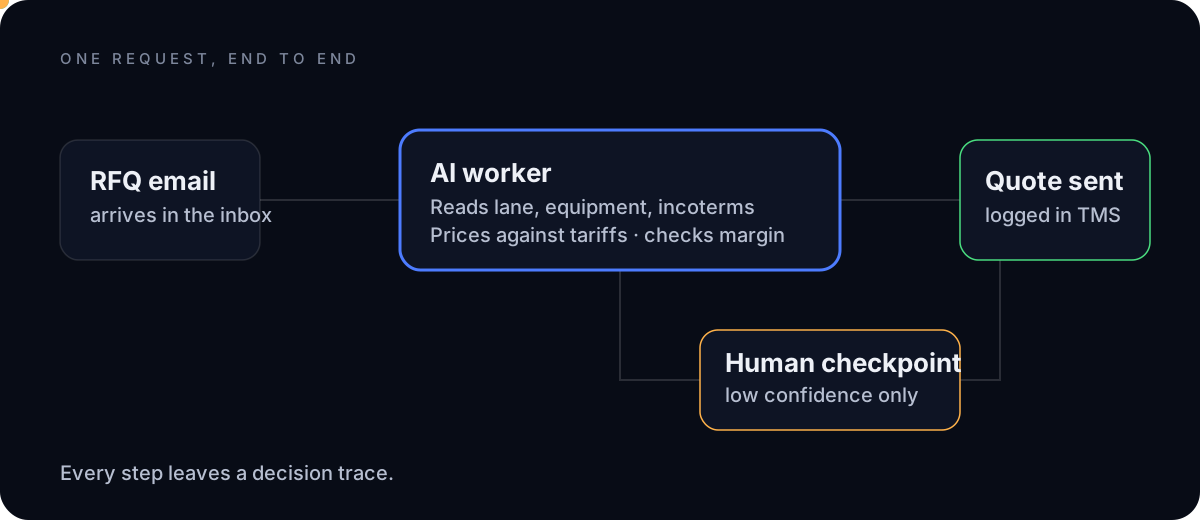
| Sales and pricing | Quoting desk | Reads inbound RFQs, prices them against tariffs and rate sheets, drafts the quote |
| Operations | Order-to-TMS clerk | Turns inbound orders and bookings into complete shipment files, chasing missing details |
| Customer service | Inbox triage | Reads every inbound message and routes it to the right owner and workflow |
| Account management | Retention specialist | Flags accounts drifting from their own baseline, with evidence and a draft check-in |
| Finance | Collections agent | Runs payment follow-ups and hands every dispute to a person |
Exworks maintains a library of more than 40 certified logistics workflows across commercial, operations, customer service and finance, which are adapted to each company's rules rather than built from scratch.
How an AI workforce differs from RPA and chatbots
RPA follows fixed scripts over structured screens. It breaks when an email arrives in a new format or a portal changes its layout, and it cannot judge whether a rate looks wrong. AI workers read unstructured input and make bounded decisions, while deterministic rules still handle the steps that must never vary.
Generic AI assistants help one person at a time and leave no record of what was decided or why. Many logistics companies have rolled out assistant licenses and found adoption low and value hard to measure. AI workers run inside workflows, act through governed connectors and report against business outcomes.
Point AI tools solve one task, often in their own interface. An AI workforce is managed as one system: one place to build workers, run them, monitor them and govern what they may do.
Why governance decides whether it works
Building an AI agent has become easy. Running dozens of them in production, across offices, systems and vendors, is the hard part. Without governance, AI pilots stall in sandboxes or reach production without anyone able to explain what they did.
A governed AI workforce answers four questions at all times:
- Is it safe? Boundaries are enforced at the connector level, permissions are scoped per worker, and high-risk actions require human approval.
- Is it working? Every worker reports against a shared scoreboard: hours saved, revenue protected, goal attainment, human load.
- Am I in control? Each workflow runs in a chosen mode (supervised, ramping or autonomous), and promotion between modes happens on evaluation evidence.
- Does it improve? Human corrections become reviewed rules, never silent changes.
How to start
The companies that get AI workers into production fastest start narrow:
- Pick one job with clear value, such as RFQ response time or order entry, rather than a broad "AI strategy".
- Connect the real systems early: email, TMS, CRM and pricing data. A worker that cannot act in the system of record stays a demo.
- Run supervised first. Every action passes a human checkpoint until the evaluation results justify more autonomy.
- Measure one scoreboard that the business and IT both trust.
- Scale to a team once the first worker is promoted, reusing connectors and governance.
With Exworks, this path takes the first AI worker from mapping to production in about 45 days, with Exworks engineers deploying alongside the customer's team on top of the systems it already runs.